Walleye Weight Calculator & Size Chart
Estimate walleye weight from total length and use the printable 12–36 inch size chart.
Quick answer: A 20-inch walleye is about 2.96 pounds using the Wisconsin DNR length-only estimate: total length cubed, divided by 2,700. Enter any length below or jump to the 12–36 inch chart.
This species estimate uses total length only, so no girth measurement is required.
Wisconsin DNR walleye estimate: length³ ÷ 2,700
of the 25 lb walleye world record
Old Hickory Lake, Tennessee
Verify the current IGFA record ↗View species guide →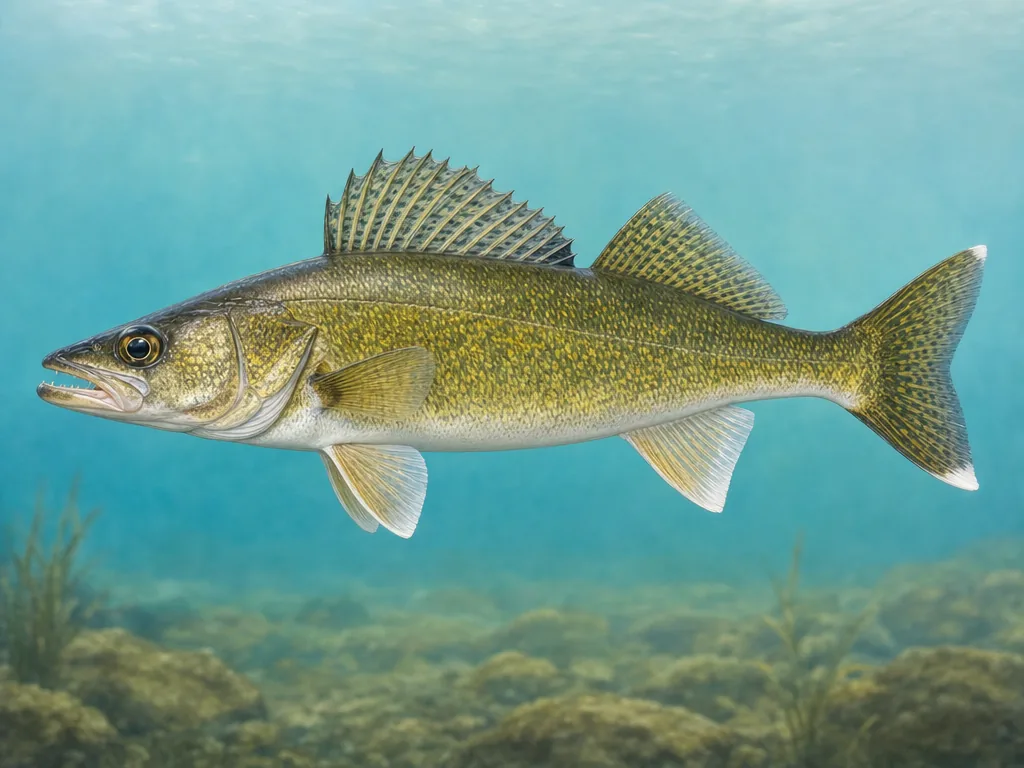
Better measurement, better estimate
How to measure a walleye
- 1 Lay the fish flat. Use a wet measuring board or ruler and keep the fish supported.
- 2 Close the mouth. Align the nose at zero and extend the tail naturally.
- 3 Read total length. Measure to the farthest tail tip, then enter that number above.
Keep handling brief, especially when releasing the fish. The walleye formula on this page does not require a girth measurement.
Length-to-weight reference
Walleye size and weight chart: 12–36 inches
Each estimate uses total length in inches: length × length × length ÷ 2,700. Real fish vary with body condition, season, sex, and local forage, so use the chart as a field estimate rather than a certified weight.
| Length | Estimated weight | Approx. lb & oz |
|---|---|---|
| 12 in | 0.64 lb | 10 oz |
| 13 in | 0.81 lb | 13 oz |
| 14 in | 1.02 lb | 1 lb |
| 15 in | 1.25 lb | 1 lb 4 oz |
| 16 in | 1.52 lb | 1 lb 8 oz |
| 17 in | 1.82 lb | 1 lb 13 oz |
| 18 in | 2.16 lb | 2 lb 3 oz |
| 19 in | 2.54 lb | 2 lb 9 oz |
| 20 in | 2.96 lb | 2 lb 15 oz |
| 21 in | 3.43 lb | 3 lb 7 oz |
| 22 in | 3.94 lb | 3 lb 15 oz |
| 23 in | 4.51 lb | 4 lb 8 oz |
| 24 in | 5.12 lb | 5 lb 2 oz |
| 25 in | 5.79 lb | 5 lb 13 oz |
| 26 in | 6.51 lb | 6 lb 8 oz |
| 27 in | 7.29 lb | 7 lb 5 oz |
| 28 in | 8.13 lb | 8 lb 2 oz |
| 29 in | 9.03 lb | 9 lb 1 oz |
| 30 in | 10.0 lb | 10 lb |
| 31 in | 11.0 lb | 11 lb 1 oz |
| 32 in | 12.1 lb | 12 lb 2 oz |
| 33 in | 13.3 lb | 13 lb 5 oz |
| 34 in | 14.6 lb | 14 lb 9 oz |
| 35 in | 15.9 lb | 15 lb 14 oz |
| 36 in | 17.3 lb | 17 lb 4 oz |
Common walleye sizes
- 16-inch walleye
- about 1.52 lb
- 20-inch walleye
- about 2.96 lb
- 24-inch walleye
- about 5.12 lb
- 28-inch walleye
- about 8.13 lb
- 32-inch walleye
- about 12.1 lb
Method source: Wisconsin Department of Natural Resources. For a separate field comparison, see the New York DEC average length-weight table.
Find stocked walleye waters
Open a state schedule built from normalized public-agency records, or search the national map near your location.
Optional gear for measuring and releasing walleye
A board gives a fast total-length reading, a scale verifies the estimate, and a fish-friendly net helps keep handling controlled. Compare sizes and current availability before buying.
As an Amazon Associate, we earn from qualifying purchases.
- Fish measuring boards Look for a readable scale, raised end stop, and enough length for your target species.
- Water-resistant fishing scales Use a scale when you need a measured weight instead of a length-based estimate.
- Rubberized landing nets A knotless rubberized basket can reduce tangles and help keep the fish supported.
Common questions
How do you estimate walleye weight from length?
Measure total length in inches, multiply the length by itself three times, and divide by 2,700. A 20-inch walleye is about 2.96 pounds with this Wisconsin DNR formula.
How accurate is a walleye length-to-weight chart?
It is an estimate based on a general relationship between length and weight. A fish may be heavier or lighter because of season, sex, forage, spawning condition, and local body shape.
How should I measure a walleye?
Lay the fish flat on a wet measuring board, close its mouth, and measure a straight total length from the nose to the farthest tail tip. Keep handling brief if you plan to release it.
Related species guides: walleye