Fly Fishing Hatch Calendar

Build a fly box for your next trip, in any of the 50 states. Compare seasonal insects, find a surface or subsurface pattern, and save a checklist before you leave.

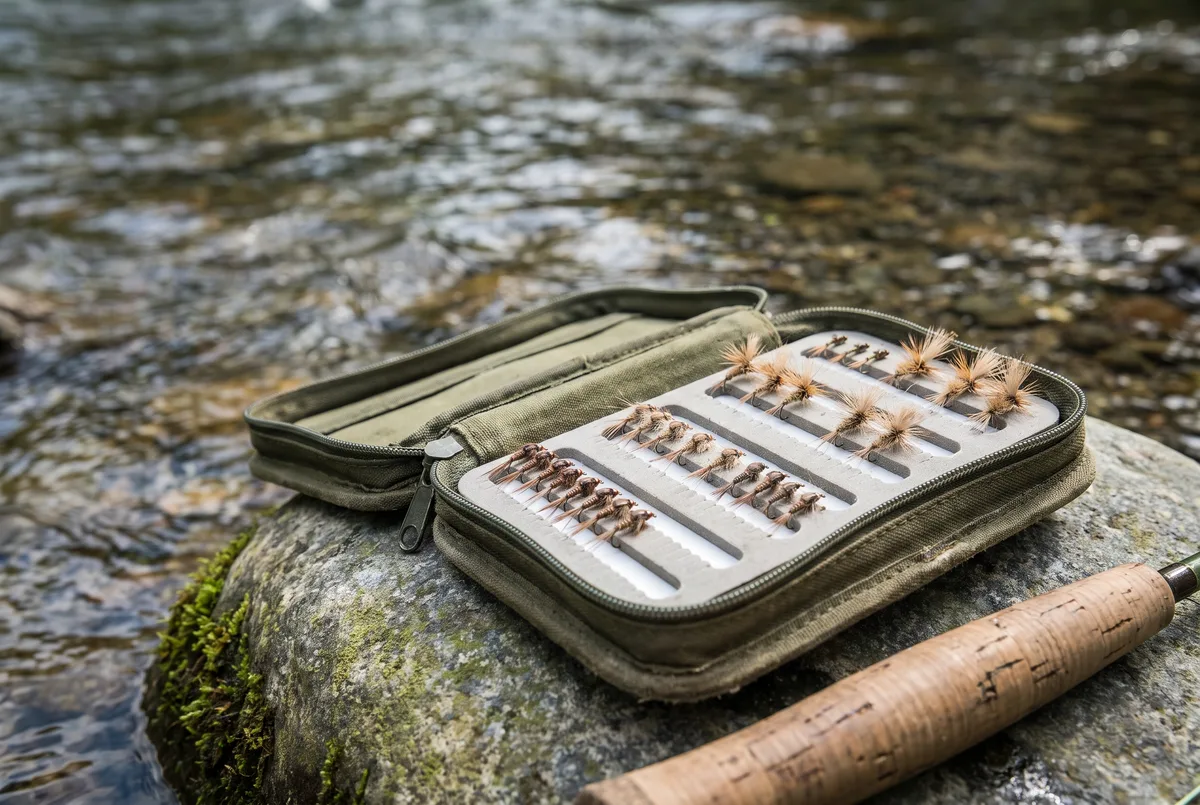
An open box of artificial trout flies on a streamside rock beside a cork fly rod handle
Illustrative image created with Higgsfield.

Find what to put in your fly box

All 50 states · 18 regional views
Published seasonal reference

Northern Rockies

Anchored to the Gallatin River in southwest Montana. Other Rocky Mountain rivers, especially tailwaters, need their own local check.

Runoff can coincide with spring caddis. Salmonflies, golden stones, and PMDs tend to follow as the river settles into its summer pattern.

Seasonal source: Montana Angler: Gallatin River hatches. Year-round midge context: Orvis winter fly guide.

Your year on the water

9 matches

Listed months overlap a typical season; a hatch may last only a few days. Sizes are starting points. Terrestrials fall into the water rather than hatch from it.

  • Mayfly

    Blue-winged olives (BWO)

    Start with sizes #16-22

    Typical seasonMar-May, Sep-Oct

    Late morning to afternoon

    SurfaceParachute BWO or olive Comparadun

    Below the surfacePheasant Tail nymph or olive emerger

    What to watch for

    Look for small olive-bodied mayflies. Fish feeding just below the film may take an emerger more readily than a high-floating dry.

  • Caddisfly

    Caddisflies

    Start with sizes #12-18

    Typical seasonMay-Aug

    Afternoon into evening

    SurfaceElk Hair Caddis or X-Caddis

    Below the surfaceCaddis pupa or soft hackle

    What to watch for

    Tent-shaped wings help separate adults from mayflies. Carry a pupa as well as a dry; feeding can begin below the surface.

  • Stonefly

    Golden stoneflies

    Start with sizes #8-12

    Typical seasonJun-Jul

    Daytime; watch banks

    SurfaceGolden Stimulator

    Below the surfaceGolden stonefly nymph

    What to watch for

    Check the actual insect before selecting a large fly. Golden stones overlap other stonefly hatches but are usually smaller than salmonflies.

  • Midge

    Midges

    Start with sizes #18-24

    Typical seasonYear-round

    Warmer hours in winter; varies in summer

    SurfaceGriffith's Gnat or small midge emerger

    Below the surfaceZebra Midge

    What to watch for

    Look for tiny insects and gentle surface dimples. Start below the surface when there is no obvious rise, then adjust to the feeding stage.

    A year-round food source on suitable open water; a listed month does not mean adults emerge every day.

  • Mayfly

    Pale morning duns (PMD)

    Start with sizes #14-16

    Typical seasonJun-Jul

    Late morning to afternoon

    SurfacePMD Sparkle Dun or PMD Comparadun

    Below the surfacePheasant Tail nymph or PMD emerger

    What to watch for

    Check the quiet edges of riffles for delicate rises. A low-riding emerger is useful when duns are present but dry flies are refused.

  • Stonefly

    Salmonflies

    Start with sizes #4-8

    Typical seasonJun-Jul

    Daytime; watch banks

    SurfaceSalmonfly dry or large Chubby Chernobyl

    Below the surfaceLarge dark stonefly nymph

    What to watch for

    Adults and empty shucks on riverside vegetation help locate the emergence. Cover bank structure and current seams.

  • Stonefly

    Yellow sallies

    Start with sizes #12-16

    Typical seasonJun-Aug

    Afternoon and evening

    SurfaceYellow Sally dry or small yellow Stimulator

    Below the surfaceSmall yellow stonefly nymph

    What to watch for

    Small yellow stoneflies can look like pale mayflies in flight. Observe the wing position of a resting adult before choosing a pattern.

  • Land insect

    Ants and beetles

    Start with sizes #12-20

    Typical seasonJul-Sep

    Daytime near vegetation

    SurfaceFoam Ant or Foam Beetle

    Below the surfaceSunken ant pattern

    What to watch for

    These land insects fall or blow into the water. Work beneath overhanging vegetation; their availability is not an aquatic hatch.

  • Land insect

    Grasshoppers

    Start with sizes #6-14

    Typical seasonJul-Sep

    Warm daytime hours

    SurfaceFoam Hopper or Parachute Hopper

    Below the surfaceOptional small nymph dropper

    What to watch for

    Look for grassy banks and insects entering the water. Use a hopper only where the available food and fish response support it.

Compare the full year

Filled circles mark listed seasonal months. The outlined column is your selected month. Insect and search filters still apply.

Typical insect seasons for Northern Rockies
Insect
Blue-winged olives (BWO)·······
Caddisflies········
Golden stoneflies··········
Midges
Pale morning duns (PMD)··········
Salmonflies··········
Yellow sallies·········
Ants and beetles·········
Grasshoppers·········

Check a local report before the trip, then match what the fish are eating when you arrive. This calendar is a planning reference, not a report of insects observed today.

Build a fly selection for your month

Choose your state, then a reference water or field guide that fits the trip. Pick a month to see the seasonal chart, or use an untimed field guide to investigate food on the water. Each result includes starting hook sizes and patterns for the surface and below it. Search by an insect name or a familiar fly to narrow the list.

Use the annual river charts to compare months without losing your place. Once the selection looks useful, download the fly box checklist. It keeps the state, source geography, month, sizes, patterns, and on-water cues together so you can check your box before leaving home.

Every view names its source and explains its reach. The 50-state directory helps you choose a starting point. A neighboring river chart is a comparison for planning; your particular stream, reservoir, or mountain lake may have different insects and timing.

A nationwide calendar with local context

The regional views give different waters their own references: Catskill mayflies, Michigan Hex, South Platte midges, Provo seasonal insects, Black Hills stillwater foods, and White River caddis. Switch reference waters within your state to compare the options before packing.

For Alaska, start with the state's rainbow trout lake fly guide. For bass and panfish, the warmwater view draws on Texas Parks and Wildlife fly-fishing instruction. These sources support a useful fly box without establishing a month-by-month hatch prediction for every location.

Hawaii has a separate freshwater view linked to Division of Aquatic Resources information. Check the island, waterbody, and current access first. The insect suggestions are editorial options to compare with observed feeding; saltwater forage and native insect emergence are outside this guide.

Match what the trout are eating

The insect you notice above the river may not be the one the fish are taking. Spend a few minutes watching the surface and the rise forms before changing flies. Compare the size, shape, and color of insects actually drifting to the fish, as the Orvis hatch-matching lesson demonstrates.

A fly box should cover stages as well as names. A mayfly nymph, an emerger caught in the surface film, a winged dun, and a spent spinner can require different presentations during the same hatch.

When fish stay below the surface

Start with the calendar's subsurface suggestion and adjust its depth to the water you are fishing. The absence of rising fish does not mean the insects have disappeared.

When rises are gentle or hard to read

Look closely at the film. An emerger or spent-wing pattern may fit the feeding stage better than a dry fly riding high on its hackle.

When adults are clearly being taken

Choose a surface pattern that matches the natural insect, then pay attention to the drift. A close imitation still has to reach the fish in a convincing way.

Why the same hatch happens at different times

Regional calendars smooth out a lot of local detail. A cold spring can hold an emergence back. A low-elevation reach may warm sooner than a mountain tributary, while a dam release can keep a tailwater on a different schedule from the river next door.

The regional source notes help you see those limits. The Rockies view, for example, uses the Gallatin as its anchor; the Sierra view uses the Truckee. Neither should be treated as a precise forecast for every river in those mountains.

Check a current river report before traveling. When you arrive, look for adults, empty shucks, and feeding fish. The calendar helps you pack; the water helps you choose.

Keep a small backup selection

Carry more than the headline dry fly. A matching nymph and an emerger give you somewhere to go when the feeding stage changes. Small midges can also be useful outside the showier hatches, including winter on suitable open water. Orvis explains midge larvae, pupae, and winter presentations.

For stocked fish, use the stocking finder to choose water, then work from the food and behavior you observe. Our guide to fishing after a trout stocking helps you plan when to go.

Hatch calendar questions

What is hatching this month?

Choose your state, a reference water, and a month to see published seasonal insect windows. The calendar has 15 seasonal references and three untimed field guides. It does not report live hatches; river conditions and local observations should decide your final fly choice.

Does this hatch calendar cover all 50 states?

Yes. Every state has a starting view, local planning notes, and a link to fishing and stocking resources. Coverage includes 18 regional views. Some states use a named neighboring river as a comparison, while Alaska, Hawaii, and warmwater views provide fly-selection guidance without assigning unsupported monthly hatch dates.

How do I use the Alaska, Hawaii, and warmwater views?

Use these field guides to build a selection of insect imitations, then confirm the food and feeding stage on your water. The month records your trip but does not filter the suggestions. These views have no monthly emergence chart because a statewide hatch schedule is not established by their sources.

How accurate is a regional hatch calendar?

A hatch calendar is a seasonal starting point. Water temperature, elevation, weather, snowmelt, and dam releases can shift timing. A marked month may contain only a short emergence, and some nearby streams will not have the insects listed.

What fly should I use if nothing is hatching?

Watch for feeding below the surface and consider a nymph or pupa that resembles the food in that water. Midges can be useful on suitable open water in any season. A streamer is another option when fish are feeding on larger prey. Change depth and presentation as well as the fly.

What do the fly size numbers mean?

The sizes are hook-size starting points for an imitation. Within ordinary numbered trout hooks, a higher number generally means a smaller hook: a size 20 is smaller than a size 12. Hook shapes and shank lengths vary, so compare the finished fly with the natural insect.

Why are ants, beetles, and hoppers on a hatch chart?

They are useful trout foods during the warmer months, even though they do not hatch from the river. The calendar labels them as land insects and shows seasonal availability separately from aquatic emergence.

Can I use this calendar for stocked trout?

Use it when stocked trout are feeding on local insects. A stocking date does not establish which hatch is present or what the fish will eat. Check stocking reports for places to fish, then observe the water and feeding behavior before choosing a fly.

Regional hatch charts and sources

Browse 15 seasonal references and three untimed field guides below. Month ranges simplify published windows, with additional year-round midge context from Orvis where noted. A listed month means some overlap with a season, not continuous emergence. Fly patterns and unassigned sizes are editorial starting suggestions. Sources reviewed September 8, 2026.

Northeast / Catskills hatch chart

Anchored to the Catskill rivers of New York. Nearby Northeast waters can run earlier or later. Spring mayflies lead into summer sulphurs and slate drakes. Cold tailwaters can keep a hatch going after nearby freestone streams have moved on.

Seasonal source: Dette Flies: Catskill hatch chart.

Insects, timing coverage, and starting fly sizes for Northeast / Catskills
Insect or foodTypical monthsStarting size
Early dark stonefliesFeb-Apr#12-18
Grannom caddisMay#12-18
Green drakesMay-Jun#8-12
HendricksonsApr-May#12-14
March brownsMay-Jun#10-14
MidgesA year-round food source on suitable open water; a listed month does not mean adults emerge every day.Year-round#18-24
October caddisOct#8-12
Quill GordonsApr#12-16
Slate drakes (Isonychia)May-Oct#10-14
SulphursCombines the larger spring sulphurs and smaller summer sulphurs.May-Aug#14-18
TricosJul-Nov#20-24

Find official fishing and stocking resources: New York · Pennsylvania.

Southern Appalachians hatch chart

Western North Carolina and the Smokies. Use local reports for individual Tennessee tailwaters and higher elevations. Quill Gordons mark the early season; yellow sallies and pale mayflies follow. Elevation, rainfall, and dam releases can shift this schedule.

Seasonal source: Hookers Fly Shop: Southeast hatch chart.

Insects, timing coverage, and starting fly sizes for Southern Appalachians
Insect or foodTypical monthsStarting size
Blue-winged olives (BWO)Jan-Mar, Nov-Dec#16-22
CaddisfliesMar-Oct#12-18
Early dark stonefliesJan-Mar#12-18
Golden stonefliesMay-Aug#6-10
HendricksonsApr#12-16
March brownsApr-May#10-14
MidgesA year-round food source on suitable open water; a listed month does not mean adults emerge every day.Year-round#18-24
Quill GordonsMar-Apr#12-16
Slate drakes (Isonychia)Jun-Oct#10-14
SulphursApr-Aug#14-18
TricosJun-Oct#20-22
Yellow salliesApr-Aug#12-16
Ants and beetlesJun-Sep#12-20
GrasshoppersJun-Sep#10-14

Find official fishing and stocking resources: North Carolina · Tennessee.

Upper Midwest / Driftless hatch chart

Anchored to southeast Minnesota streams. Wisconsin and Iowa spring creeks are nearby comparisons, not identical schedules. Spring-fed water supports small insects for much of the season. This chart does not model Michigan hex hatches or Great Lakes tributary runs.

Seasonal source: Minnesota DNR: Southeast Minnesota hatch chart (PDF).

Insects, timing coverage, and starting fly sizes for Upper Midwest / Driftless
Insect or foodTypical monthsStarting size
Blue-winged olives (BWO)Mar-May, Sep-Oct#16-22
Early dark stonefliesJan-May#12-14
Golden stonefliesJun-Aug#4-8
Grannom caddisMay-Jun#12-14
HendricksonsMar-May#12-14
March brownsJun-Jul#10-12
MidgesA year-round food source on suitable open water; a listed month does not mean adults emerge every day.Year-round#18-24
SulphursMay-Jul#16-18
TricosJul-Sep#20-24
Yellow salliesJun-Jul#12-14
Ants and beetlesApr-Sep#8-24
GrasshoppersJul-Sep#6-16

Find official fishing and stocking resources: Minnesota · Wisconsin.

Northern Rockies hatch chart

Anchored to the Gallatin River in southwest Montana. Other Rocky Mountain rivers, especially tailwaters, need their own local check. Runoff can coincide with spring caddis. Salmonflies, golden stones, and PMDs tend to follow as the river settles into its summer pattern.

Seasonal source: Montana Angler: Gallatin River hatches.

Insects, timing coverage, and starting fly sizes for Northern Rockies
Insect or foodTypical monthsStarting size
Blue-winged olives (BWO)Mar-May, Sep-Oct#16-22
CaddisfliesMay-Aug#12-18
Golden stonefliesJun-Jul#8-12
MidgesA year-round food source on suitable open water; a listed month does not mean adults emerge every day.Year-round#18-24
Pale morning duns (PMD)Jun-Jul#14-16
SalmonfliesJun-Jul#4-8
Yellow salliesJun-Aug#12-16
Ants and beetlesJul-Sep#12-20
GrasshoppersJul-Sep#6-14

Find official fishing and stocking resources: Montana · Wyoming · Idaho.

Pacific Northwest hatch chart

Anchored to the lower Deschutes in Oregon. Coastal streams, stillwaters, and Washington rivers have different insect communities. Spring brings March browns and caddis, followed by the Deschutes stonefly season. Smaller mayflies and caddis give you options through summer and fall.

Seasonal source: The Fly Fisher's Place: Lower Deschutes fly and hatch list (PDF).

Insects, timing coverage, and starting fly sizes for Pacific Northwest
Insect or foodTypical monthsStarting size
Blue-winged olives (BWO)Mar-Apr, Sep-Oct#16-22
CaddisfliesMar-Oct#12-18
Golden stonefliesMay#6-12
March brownsMar-Apr#10-14
MidgesA year-round food source on suitable open water; a listed month does not mean adults emerge every day.Year-round#18-24
October caddisSep-Oct#8-12
Pale morning duns (PMD)May-Oct#14-18
SalmonfliesMay is the planning anchor in this source; ask a local shop whether the hatch has moved upstream or into June.May#4-8

Find official fishing and stocking resources: Oregon · Washington.

Sierra Nevada hatch chart

Anchored to the Truckee River chart. The lower Yuba and other low-elevation California rivers can have quite different seasons. Watch the runoff and elevation before choosing a trip date. The Truckee pattern includes spring olives, summer caddis, and autumn October caddis.

Seasonal source: Reel Anglers Fly Shop: Truckee River hatch chart (PDF).

Insects, timing coverage, and starting fly sizes for Sierra Nevada
Insect or foodTypical monthsStarting size
Blue-winged olives (BWO)Jan-Apr, Oct-Dec#16-22
CaddisfliesMay-Sep#12-18
Golden stonefliesJun-Jul#6-12
Green drakesMay-Jun#8-12
March brownsMar-Apr#10-14
MidgesA year-round food source on suitable open water; a listed month does not mean adults emerge every day.Year-round#18-24
October caddisSep-Oct#8-12
Pale morning duns (PMD)Jun-Aug#14-18
Yellow salliesJun-Aug#12-16
Ants and beetlesMay-Sep#12-20
GrasshoppersMay-Sep#6-14

Find official fishing and stocking resources: California · Nevada.

Southern New England / Deerfield hatch chart

Anchored to the Deerfield River in western Massachusetts. Connecticut, Rhode Island, and Vermont waters are comparisons, not identical schedules. The source separates insect species and partial-month windows. This view combines some related insects into monthly packing guidance.

Seasonal source: Deerfield River Watershed Trout Unlimited: hatch chart and insect field guide.

Insects, timing coverage, and starting fly sizes for Southern New England / Deerfield
Insect or foodTypical monthsStarting size
Blue-winged olives (BWO)Apr-Nov#18-24
CaddisfliesMay-Sep#16-20
Early dark stonefliesMar-Apr#16-18
Golden stonefliesJun-Jul#6-10
Grannom caddisMay-Jun#14-18
HendricksonsApr-May#14
Light CahillsJun-Sep#12-16
MidgesMar-Nov#18-26
October caddisThe eastern insects in this reference are smaller than many western October caddis.Sep-Oct#14-16
Quill GordonsApr-May#14
Slate drakes (Isonychia)Jun-Sep#12-14
SulphursMay-Jul#16-18
Yellow salliesApr-Sep#14-18
Ants and beetlesJun-Sep#12-20
GrasshoppersJun-Sep#6-14

Find official fishing and stocking resources: Massachusetts · Connecticut · Vermont.

Northern New England / Penobscot hatch chart

Anchored to the Penobscot River in Maine. Other Maine rivers and nearby New Hampshire and Vermont waters need local checks. The reference includes summer Hex, dragonflies, and damselflies as well as spring mayflies. River branches and lakes will not share every listed insect.

Seasonal source: Big Y Fly Co: Penobscot River hatch chart.

Insects, timing coverage, and starting fly sizes for Northern New England / Penobscot
Insect or foodTypical monthsStarting size
Blue-winged olives (BWO)Feb-Apr#14-22
CaddisfliesMay-Sep#6-18
DamselfliesMay-Jul#4-8
DragonfliesMay-Sep#4-8
HendricksonsMay-Jun#12-14
Hex mayfliesJul#4-6
Light CahillsMay-Jul#10-16
March brownsMay-Jul#12-16
MidgesYear-round#16-22
Quill GordonsApr-May#12-14
Stoneflies (mixed species)Mar-Jul#12-16
Ants and beetlesJun-Sep#12-20
GrasshoppersJul-Sep#8-14

Find official fishing and stocking resources: Maine · New Hampshire · Vermont.

Mid-Atlantic / Penns Creek hatch chart

Anchored to Penns Creek in Pennsylvania. Other Mid-Atlantic spring creeks, freestones, and tailwaters have their own timing. Use this reference for its listed spring and late-summer mayflies and caddis. Gaps in the source are not evidence that a river has no insects.

Seasonal source: Big Y Fly Co: Penns Creek hatch chart.

Insects, timing coverage, and starting fly sizes for Mid-Atlantic / Penns Creek
Insect or foodTypical monthsStarting size
Grannom caddisApr-May#12
Green drakesMay-Jun#10
HendricksonsApr-May#14
Light CahillsMay-Jun#14-16
MidgesA year-round food source on suitable open water; a listed month does not mean adults emerge every day.Year-round#18-24
Quill GordonsApr-May#14
SulphursMay-Jun#14-16
White mayfliesAug-Sep#14-16

Find official fishing and stocking resources: Pennsylvania · Maryland · New Jersey.

Great Lakes / Au Sable hatch chart

Anchored to the North Branch Au Sable in Michigan. This is not the Ausable River in New York or a Great Lakes fish-run calendar. Brown drakes and Hex add larger summer mayflies to the box. The source describes this Michigan river; nearby states and lakes need their own local check.

Seasonal source: Guide Recommended: North Branch Au Sable guide and hatch chart.

Insects, timing coverage, and starting fly sizes for Great Lakes / Au Sable
Insect or foodTypical monthsStarting size
Blue-winged olives (BWO)Jun-Oct#18
Brown drakesFly sizes here are editorial starting points; check the larger natural insect before choosing a hook.May-Jun#8-12
CaddisfliesApr-Sep#12-18
HendricksonsMay-Jun#14-18
Hex mayfliesJun-Jul#6-8
MidgesMay-Oct#16-22
Stoneflies (mixed species)Jun-Jul#12-18
SulphursMay-Aug#16-18
TricosJun-Sep#20
Ants and beetlesThe published entry is for flying ants; beetle availability needs a separate on-water check.Jul-Sep#18
GrasshoppersJul-Sep#8

Find official fishing and stocking resources: Michigan · Wisconsin.

Southern Rockies / South Platte hatch chart

Anchored to the South Platte River in Colorado. Use the chart as a reference for the river, not a single schedule for all Rocky Mountain elevations. Small midges and olives make useful starting points. Summer PMDs, caddis, tricos, and bank-side hoppers add options when local conditions support them.

Seasonal source: Big Y Fly Co: South Platte River hatch chart.

Insects, timing coverage, and starting fly sizes for Southern Rockies / South Platte
Insect or foodTypical monthsStarting size
Blue-winged olives (BWO)Mar-May, Aug-Oct#16-20
CaddisfliesMay-Sep#10-18
Golden stonefliesMay-Jul#8-10
MidgesYear-round#20-24
Pale morning duns (PMD)Jun-Aug#16-18
TricosJul-Oct#18-22
GrasshoppersJul-Sep#6-12

Find official fishing and stocking resources: Colorado · Wyoming.

Utah / Provo River hatch chart

Anchored to a published Provo River chart. Upper, middle, and lower river reaches do not necessarily have the same insect populations. Compare the river section before expecting a large stonefly or green drake hatch. The smaller mayflies and midges are also worth checking locally.

Seasonal source: Big Y Fly Co: Provo River hatch chart.

Insects, timing coverage, and starting fly sizes for Utah / Provo River
Insect or foodTypical monthsStarting size
Blue-winged olives (BWO)Mar-May, Oct-Nov#16-22
CaddisfliesMay-Oct#12-14
Green drakesJun-Aug#10-14
MidgesYear-round#20-22
Pale morning duns (PMD)Jun-Aug#12-16
Stoneflies (mixed species)The reference groups large black and gold stoneflies. Confirm their presence on your section.May-Jul#6-10
Yellow salliesJun-Aug#14-16
Ants and beetlesJun-Oct#12-20
GrasshoppersJun-Oct#6-16

Find official fishing and stocking resources: Utah.

Southwest / San Juan River hatch chart

Anchored to seasonal food guidance for the San Juan tailwater in New Mexico. Arizona and other Southwest waters are comparisons only. These are broad food seasons, including insects present below the surface. Scuds, worms, and other non-insect forage can matter here but are outside the insect filters.

Seasonal source: Abe's Motel and Fly Shop: San Juan seasonal fishing guide.

Insects, timing coverage, and starting fly sizes for Southwest / San Juan River
Insect or foodTypical monthsStarting size
CaddisfliesJun-Aug#12-18
Mayflies (mixed species)The source names mayflies broadly; it does not assign these months to every individual mayfly species.Jun-Nov#12-20
MidgesYear-round#18-24
Ants and beetlesA broad terrestrial-food window. Verify the insect and its availability along the bank.Jun-Nov#12-20

Find official fishing and stocking resources: New Mexico · Arizona.

Black Hills hatch chart

Anchored to the Dakota Angler & Outfitter Black Hills chart in South Dakota. Prairie waters and neighboring states need a local comparison. The reference includes both moving-water insects and stillwater foods. Choose a river or lake that supports the insect before applying its month window.

Seasonal source: Dakota Angler & Outfitter: Black Hills hatch chart.

Insects, timing coverage, and starting fly sizes for Black Hills
Insect or foodTypical monthsStarting size
Blue-winged olives (BWO)Includes both olive windows as dated in the published table. Check local fall reports rather than extending those dates.Feb-May, Jul-Aug#16-18
CaddisfliesMar-Sep#14-18
CallibaetisMay-Jun, Aug-Sep#14-18
DamselfliesApr-Aug#8-14
DragonfliesApr-Aug#8-14
Early dark stonefliesJan-Apr#16-18
MidgesYear-round#18-24
Pale morning duns (PMD)Jul-Sep#14-18
TricosJul-Sep#18-22
Yellow salliesMay-Jul#14-18
Ants and beetlesMar-Oct#12-20
GrasshoppersJun-Oct#6-14

Find official fishing and stocking resources: South Dakota · Wyoming.

Ozarks / White River hatch chart

Anchored to dry-fly guidance for the White River in Arkansas. Missouri trout waters and other Ozark tailwaters need their own local check. Spring caddis and later mayflies are the source-backed windows here. Release schedules, river reach, and current observations should decide the final fly choice.

Seasonal source: White River Fly Guide: dry-fly fishing seasons.

Insects, timing coverage, and starting fly sizes for Ozarks / White River
Insect or foodTypical monthsStarting size
CaddisfliesMar-May#12-14
Mayflies (mixed species)The guide gives a general mayfly window from late April through July; identify the actual insect locally.Apr-Jul#12-20
MidgesA year-round food source on suitable open water; a listed month does not mean adults emerge every day.Year-round#18-24

Find official fishing and stocking resources: Arkansas · Missouri.

Alaska freshwater field guide

Based on Alaska Department of Fish and Game fly-selection guidance for rainbow trout in lakes. No statewide monthly emergence dates are assigned. Pack nymphs as well as adults and check ice and local feeding activity. Salmon eggs, fry, leeches, and other non-insect foods may require a separate selection.

Field guide source: Alaska Department of Fish and Game: rainbow trout lake fly-fishing setup (PDF).

Insects, timing coverage, and starting fly sizes for Alaska freshwater field guide
Insect or foodTiming coverageStarting size
CaddisfliesTiming not assigned#10-16
DamselfliesTiming not assigned#10-14
DragonfliesTiming not assigned#6-12
Mayflies (mixed species)Timing not assigned#10-16
MidgesTiming not assigned#12-18
Stoneflies (mixed species)Timing not assigned#10-18

Find official fishing and stocking resources: Alaska.

Warmwater freshwater field guide

A fly-selection starting point for freshwater bass, panfish, and other insect-feeding fish. Based on Texas Parks and Wildlife instruction; no statewide hatch dates are inferred. Investigate shallow vegetation, shoreline cover, and feeding fish. These are candidate imitations to compare with observed food, not a claim that every insect occurs in every waterbody.

Field guide source: Texas Parks and Wildlife: fly-fishing basics (PDF).

Insects, timing coverage, and starting fly sizes for Warmwater freshwater field guide
Insect or foodTiming coverageStarting size
CaddisfliesTiming not assigned#12-18
DamselfliesTiming not assigned#10-14
DragonfliesTiming not assigned#6-12
Mayflies (mixed species)Timing not assigned#12-20
MidgesTiming not assigned#18-24
Ants and beetlesTiming not assigned#12-20
GrasshoppersTiming not assigned#6-14

Find official fishing and stocking resources: Texas · Florida · Louisiana.

Hawaii freshwater field guide

Freshwater trip context from Hawaii Division of Aquatic Resources. Fly suggestions are editorial options for observed insect feeding, not a documented Hawaiian hatch inventory. Choose the island and water first, then check current access and fishing rules. This guide covers freshwater fly selection; it does not model marine forage or native insect emergence.

Field guide source: Hawaii Division of Aquatic Resources: freshwater fishing.

Insects, timing coverage, and starting fly sizes for Hawaii freshwater field guide
Insect or foodTiming coverageStarting size
DamselfliesTiming not assigned#10-14
DragonfliesTiming not assigned#6-12
MidgesTiming not assigned#18-24
Ants and beetlesTiming not assigned#12-20

Find official fishing and stocking resources: Hawaii.

Find a hatch calendar starting point for your state

All 50 states are included. Open a state to see its fishing context, available reference waters, and local resources. River charts retain their source geography; field guides suggest food to check without assigning hatch dates.

Alabama

Start with the warmwater field guide for bass and panfish. Check a local report for trout water; this guide does not assign hatch dates to Alabama tailwaters.

Open Alabama in the tool

Reference views: Warmwater.

Alabama fishing and stocking resources
Alaska

Use the Alaska lake-fishing field guide to pack insect imitations. Ice, latitude, and the type of water matter more than a statewide month window.

Open Alaska in the tool

Reference views: Alaska.

Alaska fishing and stocking resources
Arizona

The San Juan chart is a nearby New Mexico tailwater comparison. Arizona mountain lakes, small streams, and desert reservoirs need their own local timing check.

Open Arizona in the tool

Reference views: San Juan · Warmwater.

Arizona fishing and stocking resources
Arkansas

Use the White River reference for trout-trip planning and the warmwater guide for bass and panfish. Check the reach and release schedule before applying a river chart.

Open Arkansas in the tool

Reference views: White River · Warmwater.

Arkansas fishing and stocking resources
California

The Truckee chart represents Sierra trout water. Coastal streams, lower-elevation rivers, and reservoirs need a separate local check; the Deschutes is an Oregon comparison.

Open California in the tool

Reference views: Sierra · Northwest · Warmwater.

California fishing and stocking resources
Colorado

Start with the South Platte reference. Compare elevation and river reach before using its dates on another Colorado stream, especially during runoff.

Open Colorado in the tool

Reference views: South Platte · Rockies · Warmwater.

Colorado fishing and stocking resources
Connecticut

The Deerfield and Catskill charts are neighboring reference waters. Check a local river report before applying their timing to Connecticut streams or tailwaters.

Open Connecticut in the tool

Reference views: Deerfield · Catskills · Warmwater.

Connecticut fishing and stocking resources
Delaware

Use the field guide for ponds and warmwater streams. The Pennsylvania chart is a comparison for a trout trip, not a hatch forecast for Delaware stocked water.

Open Delaware in the tool

Reference views: Warmwater · Penns Creek.

Delaware fishing and stocking resources
Florida

Use the warmwater guide to investigate insect feeding in freshwater lakes, ponds, and canals. Marine flats and saltwater forage are outside this hatch calendar.

Open Florida in the tool

Reference views: Warmwater.

Florida fishing and stocking resources
Georgia

The Smokies reference is a starting comparison for mountain trout streams. Check Georgia tailwaters separately and switch to the field guide for warmwater fishing.

Open Georgia in the tool

Reference views: Appalachians · Warmwater.

Georgia fishing and stocking resources
Hawaii

Use the freshwater field guide with island-specific access information. This view suggests flies to compare with observed food; it does not predict native insect hatches or cover saltwater.

Open Hawaii in the tool

Reference views: Hawaii.

Hawaii fishing and stocking resources
Idaho

The Gallatin and lower Deschutes are reference rivers in neighboring states. Idaho spring creeks, tailwaters, and high-country lakes can follow different schedules.

Open Idaho in the tool

Reference views: Rockies · Northwest · Warmwater.

Idaho fishing and stocking resources
Illinois

Start with the warmwater field guide. The southeast Minnesota chart is a comparison for a spring-creek trout trip, not a statewide Illinois hatch schedule.

Open Illinois in the tool

Reference views: Warmwater · Driftless.

Illinois fishing and stocking resources
Indiana

Use the field guide for warmwater fishing. The Au Sable chart describes a Michigan trout river; check local observations before using its insects or dates in Indiana.

Open Indiana in the tool

Reference views: Warmwater · Au Sable, MI.

Indiana fishing and stocking resources
Iowa

The southeast Minnesota chart is a nearby comparison for northeast Iowa trout streams. Use the warmwater guide for ponds, lakes, and other rivers.

Open Iowa in the tool

Reference views: Driftless · Warmwater.

Iowa fishing and stocking resources
Kansas

Pack from the warmwater field guide and match food on the water. Seasonal trout stocking does not establish which insects will be emerging.

Open Kansas in the tool

Reference views: Warmwater.

Kansas fishing and stocking resources
Kentucky

The Smokies chart is a regional comparison for trout fishing. Kentucky tailwaters and warmwater streams need local reports rather than assumed Smokies dates.

Open Kentucky in the tool

Reference views: Appalachians · Warmwater.

Kentucky fishing and stocking resources
Louisiana

Use the freshwater field guide for insect-feeding bass and panfish. Choose flies from the food you observe in the pond, bayou, or lake you plan to fish.

Open Louisiana in the tool

Reference views: Warmwater.

Louisiana fishing and stocking resources
Maine

The Penobscot chart is the Maine reference. Northern waters, ponds, and individual river branches may have different ice-out dates and insect communities.

Open Maine in the tool

Reference views: Penobscot · Warmwater.

Maine fishing and stocking resources
Maryland

Compare the Pennsylvania chart for trout planning and check western Maryland waters locally. Use the freshwater field guide for bass and panfish; tidal forage is not modeled.

Open Maryland in the tool

Reference views: Penns Creek · Appalachians · Warmwater.

Maryland fishing and stocking resources
Massachusetts

Start with the Deerfield chart for western Massachusetts river fishing. Ponds, tailwaters, and eastern streams may have different hatches.

Open Massachusetts in the tool

Reference views: Deerfield · Penobscot · Warmwater.

Massachusetts fishing and stocking resources
Michigan

The North Branch Au Sable chart includes Hex and brown drakes. Treat it as a river reference; Great Lakes tributary fish runs and lake hatches need a separate check.

Open Michigan in the tool

Reference views: Au Sable, MI · Driftless · Warmwater.

Michigan fishing and stocking resources
Minnesota

Use the Minnesota DNR chart for southeast trout streams. Northern lakes and streams differ; the Michigan chart is only a neighboring comparison.

Open Minnesota in the tool

Reference views: Driftless · Au Sable, MI · Warmwater.

Minnesota fishing and stocking resources
Mississippi

Use the freshwater field guide to build a bass or panfish box. Check the shoreline and feeding activity rather than relying on a trout-river calendar.

Open Mississippi in the tool

Reference views: Warmwater.

Mississippi fishing and stocking resources
Missouri

The White River chart is an Arkansas comparison for Ozark trout fishing. Missouri spring branches, trout parks, and warmwater rivers need local timing checks.

Open Missouri in the tool

Reference views: White River · Warmwater.

Missouri fishing and stocking resources
Montana

The Gallatin chart is the main reference. Spring creeks, tailwaters, and rivers east of the mountains can have different timing and water conditions.

Open Montana in the tool

Reference views: Rockies · Black Hills · Warmwater.

Montana fishing and stocking resources
Nebraska

Start with the freshwater field guide. The Black Hills chart is a neighboring South Dakota comparison, not a schedule for Nebraska trout streams.

Open Nebraska in the tool

Reference views: Warmwater · Black Hills.

Nebraska fishing and stocking resources
Nevada

The Truckee reference is the first river comparison. Nevada stillwaters and desert tailwaters need their own food and timing check.

Open Nevada in the tool

Reference views: Sierra · San Juan · Warmwater.

Nevada fishing and stocking resources
New Hampshire

Compare the Penobscot and Deerfield references, then check the elevation and river locally. Neither chart is a statewide New Hampshire forecast.

Open New Hampshire in the tool

Reference views: Penobscot · Deerfield · Warmwater.

New Hampshire fishing and stocking resources
New Jersey

Use the Catskill or Pennsylvania chart as a neighboring trout-river comparison. Check New Jersey stream conditions and use the field guide for warmwater fishing.

Open New Jersey in the tool

Reference views: Catskills · Penns Creek · Warmwater.

New Jersey fishing and stocking resources
New Mexico

The San Juan reference describes tailwater food seasons. Mountain freestone streams and reservoirs should be checked separately.

Open New Mexico in the tool

Reference views: San Juan · South Platte · Warmwater.

New Mexico fishing and stocking resources
New York

Start with the Catskill reference. Adirondack waters and Great Lakes tributaries need a local check; the Au Sable option here refers to Michigan, not New York.

Open New York in the tool

Reference views: Catskills · Au Sable, MI · Warmwater.

New York fishing and stocking resources
North Carolina

Use the Smokies and western North Carolina reference for mountain trout planning. Piedmont and coastal freshwater fishing call for the warmwater guide.

Open North Carolina in the tool

Reference views: Appalachians · Warmwater.

North Carolina fishing and stocking resources
North Dakota

Use the freshwater field guide first. The Black Hills chart is a South Dakota comparison; it does not establish hatch dates for North Dakota lakes or streams.

Open North Dakota in the tool

Reference views: Warmwater · Black Hills.

North Dakota fishing and stocking resources
Ohio

Choose the field guide for warmwater fishing. Michigan and Pennsylvania charts are comparisons for trout planning, not forecasts of Ohio hatches or tributary runs.

Open Ohio in the tool

Reference views: Warmwater · Au Sable, MI · Penns Creek.

Ohio fishing and stocking resources
Oklahoma

Use the field guide for bass and panfish. The White River is an Arkansas trout-water comparison; check Oklahoma tailwater and seasonal trout fisheries locally.

Open Oklahoma in the tool

Reference views: Warmwater · White River.

Oklahoma fishing and stocking resources
Oregon

The lower Deschutes chart is the Oregon reference. Coastal rivers, lakes, and high-elevation streams can have different insects and seasons.

Open Oregon in the tool

Reference views: Northwest · Sierra · Warmwater.

Oregon fishing and stocking resources
Pennsylvania

Start with the Penns Creek reference. Limestone streams, freestones, and tailwaters vary; confirm the insect and timing on the reach you will fish.

Open Pennsylvania in the tool

Reference views: Penns Creek · Catskills · Warmwater.

Pennsylvania fishing and stocking resources
Rhode Island

The Deerfield chart is a Massachusetts river comparison. Rhode Island ponds and stocked streams need local observations before applying those seasonal windows.

Open Rhode Island in the tool

Reference views: Deerfield · Warmwater.

Rhode Island fishing and stocking resources
South Carolina

Use the freshwater field guide for bass and panfish. The Smokies chart is a comparison for a mountain trout trip; check local tailwaters separately.

Open South Carolina in the tool

Reference views: Warmwater · Appalachians.

South Carolina fishing and stocking resources
South Dakota

Use the Black Hills chart for western trout-water planning. Prairie lakes and larger warmwater systems call for the field guide and local observations.

Open South Dakota in the tool

Reference views: Black Hills · Warmwater.

South Dakota fishing and stocking resources
Tennessee

The Smokies chart is the first mountain-stream reference. Individual Tennessee tailwaters need local hatch reports and release information.

Open Tennessee in the tool

Reference views: Appalachians · White River · Warmwater.

Tennessee fishing and stocking resources
Texas

Use the Texas Parks and Wildlife field guide to build an insect box for freshwater fishing. Check local reports for trout water; this view does not assign monthly Guadalupe hatches.

Open Texas in the tool

Reference views: Warmwater.

Texas fishing and stocking resources
Utah

Start with the Provo chart and confirm the river section. Other tailwaters, high-elevation streams, and reservoirs need their own local timing check.

Open Utah in the tool

Reference views: Provo · South Platte · San Juan · Warmwater.

Utah fishing and stocking resources
Vermont

The Penobscot and Deerfield charts are neighboring comparisons. Check Vermont river reports and elevation before treating a month as a useful hatch window.

Open Vermont in the tool

Reference views: Penobscot · Deerfield · Warmwater.

Vermont fishing and stocking resources
Virginia

Compare Appalachian and Pennsylvania trout-water references. Spring creeks, mountain streams, and warmwater rivers need different local checks.

Open Virginia in the tool

Reference views: Appalachians · Penns Creek · Warmwater.

Virginia fishing and stocking resources
Washington

The lower Deschutes is an Oregon comparison. Washington coastal streams, east-side rivers, and lakes have different insect communities and timing.

Open Washington in the tool

Reference views: Northwest · Rockies · Warmwater.

Washington fishing and stocking resources
West Virginia

Use the Appalachian or Pennsylvania chart as a trout-water comparison. Elevation and the river reach should guide your local hatch check.

Open West Virginia in the tool

Reference views: Appalachians · Penns Creek · Warmwater.

West Virginia fishing and stocking resources
Wisconsin

Compare southeast Minnesota for Driftless streams and Michigan for northern trout-river planning. Local lakes and tributaries need separate hatch and fish-run reports.

Open Wisconsin in the tool

Reference views: Driftless · Au Sable, MI · Warmwater.

Wisconsin fishing and stocking resources
Wyoming

Choose a reference that fits the water: Gallatin for a northern-river comparison, South Platte for a tailwater comparison, or Black Hills for nearby northeastern planning.

Open Wyoming in the tool

Reference views: Rockies · South Platte · Black Hills · Warmwater.

Wyoming fishing and stocking resources