The quick answer
Oregon’s official weekly trout stocking schedule shows the week a waterbody is scheduled for stocking. The Monday date in the table is the start of that week; it is not necessarily the day fish enter the water.
ODFW also warns that a waterbody may not be stocked as scheduled because of poor water conditions. Fish may be diverted to another water, or a release may happen a week before or after the listed week. Check the ODFW Recreation Report for changes.
The USAStockedFish snapshot contains 50 Oregon schedule rows through August 10, 2026. All are labeled scheduled, which is the correct status for a weekly plan.
| Scheduled week in local snapshot | Water | Zone / office | Planned total | Status |
|---|---|---|---|---|
| Week of Aug. 10 | McKenzie River-2 above Leaburg Dam | Willamette / Springfield | 850 | Scheduled |
| Week of Aug. 10 | Rogue River above Lost Creek | Southwest / Central Point | 2,500 | Scheduled |
| Week of Aug. 10 | Salmon Creek | Willamette / Springfield | 800 | Scheduled |
| Week of Aug. 10 | North Fork Santiam River-2 | Willamette / Corvallis | 2,000 | Scheduled |
These are planning rows from a dated snapshot. They are not a claim that each event was completed.
How to read the ODFW columns
The schedule separates trout into columns such as:
- Legals: legal-size fish;
- Trophy: larger fish intended for a different opportunity;
- Brood: brood fish;
- Fingerling: smaller fish;
- Total: the planned sum shown by the table.
The column tells you what ODFW planned to place in the water. It does not tell you the number of fish still present, the current bite, or what you can legally keep. Use the species and size information as a filter, not as a fishing-outcome promise.
If you are looking for catchable rainbow trout, the rainbow trout profile is a useful starting point. Return to the ODFW source for the water-specific rules and current report.
Scheduled is not completed
Oregon is an especially good example of why stocking status needs to be visible. The agency itself says the schedule is subject to change without notice and directs anglers to the Recreation Report.
Use these words carefully:
- Scheduled: ODFW lists the water for a week in its plan.
- Moved or diverted: ODFW or the Recreation Report indicates that conditions changed the plan.
- Completed: use this only when a current official report confirms the event.
- Unknown: the schedule is visible but no completion record is available.
The local data does not convert a scheduled row into a completed event. That is a feature, not a weakness. It keeps the article useful for planning without making a claim the evidence cannot support.
Why a scheduled week can change
ODFW says poor water conditions can cause fish to be diverted to another location. Logistics can also move the date. A waterbody may be too warm, too low, too high, or otherwise unsuitable for the planned release. The schedule may not update immediately when staff have to make a quick field decision.
That means the correct pre-trip sequence is:
- Use the schedule to identify a likely water and week.
- Open the Recreation Report for current changes.
- Check weather, flow, access, and any closure notices.
- Confirm the current Oregon fishing rules.
- Re-check close to departure.
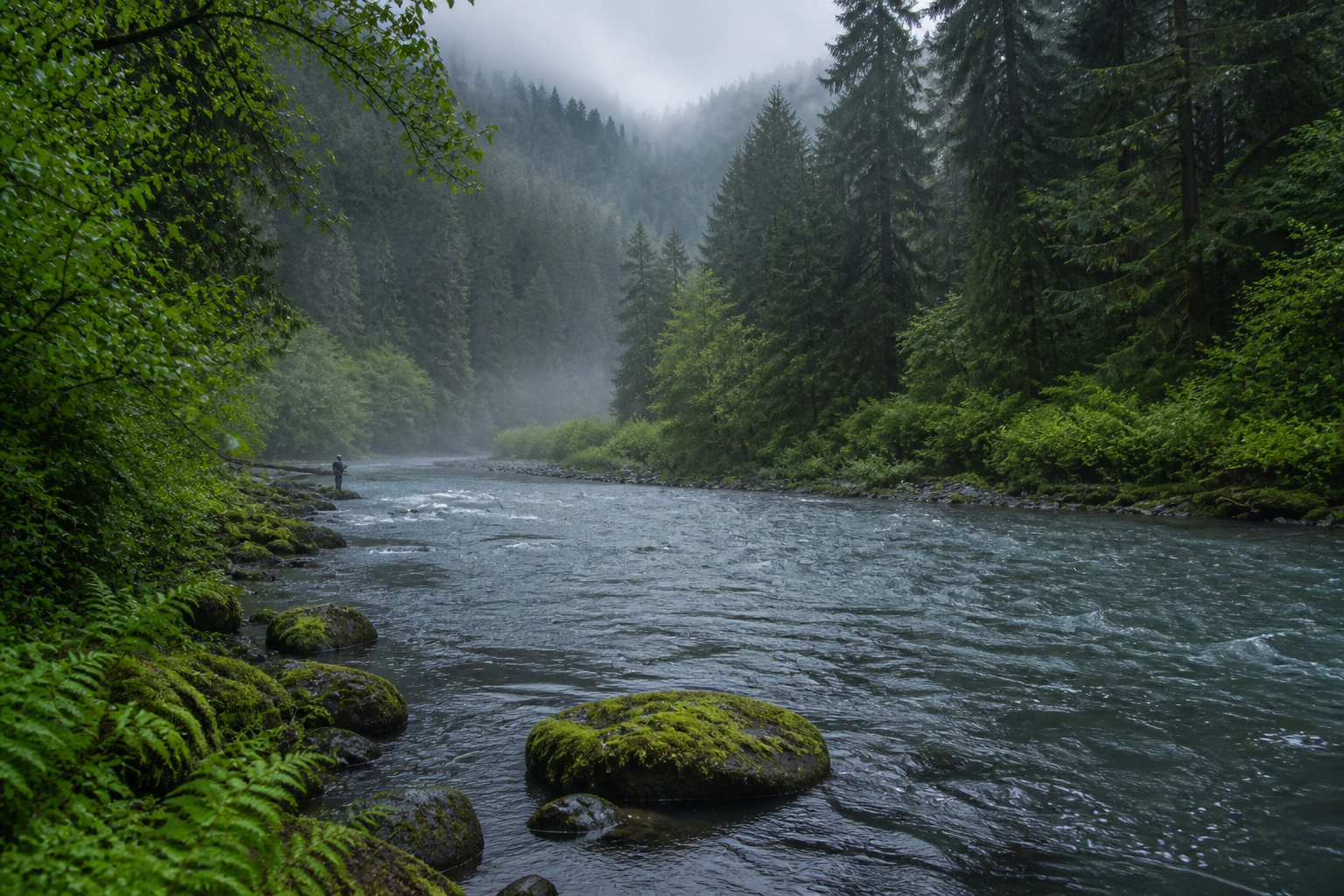
The hero image on this page is illustrative. It is not a report about current Oregon river conditions.
A waterbody-first workflow
When searching the ODFW table, use the waterbody search and zone filter rather than reading the entire statewide list. Note:
- the exact water name;
- the zone or office;
- the scheduled week;
- the planned size category;
- the total;
- any change shown in the Recreation Report.
If you need a nearby starting point, use the Oregon state page and near-me stocking tool. Those pages can organize the search, but ODFW controls the current schedule and rules.
What the schedule does not answer
An ODFW schedule does not establish:
- that the fish arrived on Monday;
- that the listed total was released;
- that the water is open;
- that public access is available at the nearest reach;
- that fish are still in the stocked area;
- that the water is safe or comfortable to wade;
- that the current bite is good.
Those are separate evidence questions. Keeping them separate is how a stocking page becomes more useful than a raw table.
Frequently asked questions
Does Oregon’s schedule show an exact stocking day?
No. ODFW says the table shows the week a waterbody will be stocked. Monday dates indicate the start of that week.
Can ODFW move a scheduled stocking?
Yes. ODFW says poor water conditions and logistical challenges can move fish to another location or another week. Check the Recreation Report for changes.
Is a scheduled Oregon row a completed stocking event?
Not by itself. Treat it as a planned event unless a current official source confirms completion.
Where should I check before driving to an Oregon trout water?
Use the ODFW Recreation Report, the current stocking schedule, and Oregon’s current fishing rules and access information.