What Michigan stocks
Michigan DNR says it produces tens of millions of fish for stocking each year. Its program includes coolwater species such as walleye, muskellunge, northern pike, and sturgeon, along with coldwater species such as trout and salmon.
The agency also explains that stocking decisions depend on the habitat, forage, predators, and competitors of a waterbody. A lake that is not stocked is not automatically neglected; it may be supporting a self-sustaining fish population.
The Michigan DNR stocking page links to the searchable fish stocking database. DNR cautions that the most current information can take several weeks to appear.
Recent records in the USAStockedFish snapshot
The local normalized snapshot was retrieved July 19, 2026. It contains 664 completed Michigan rows through July 9. It covers much more than trout:
| Date | Water | County | Species | Quantity | Average length |
|---|---|---|---|---|---|
| July 9, 2026 | Lake Charlevoix | Charlevoix | Walleye | 40,381 | 1.72 in. |
| July 8, 2026 | Lake Charlevoix | Charlevoix | Walleye | 51,558 | 1.72 in. |
| July 7, 2026 | Indian Lake | Schoolcraft | Walleye | 9,231 | 1.46 in. |
| July 2, 2026 | Caribou Lake | Chippewa | Walleye | 29,950 | 1.50 in. |
| June 30, 2026 | Lake Huron | Mackinac | Splake | 9,995 | 8.15 in. |
| June 30, 2026 | Lake Michigan | Delta | Walleye | 125,310 | 1.46 in. |
The table is a dated snapshot, not a live feed. Use the Michigan DNR database to check newer rows and the exact water.
Why species context matters
Michigan’s stocking records support different fishing questions:
- Walleye: A coolwater stocking record may point to a lake-management project or a future year-class, not immediate catchable fish.
- Splake: A stocked hybrid trout record has a different species and water context than a catchable rainbow release.
- Trout and salmon: Coldwater programs can support Great Lakes, tributary, and inland-water opportunities.
- Muskellunge and northern pike: Size, habitat, and regulations matter before a stocking record becomes a practical fishing plan.
Use the walleye profile or rainbow trout profile for general species background. Then return to the official water-specific information. The local row is evidence of what the program recorded, not an angler-outcome forecast.
How to work around database lag
The DNR says the most current stocking information can take several weeks to show up in the database. That creates a simple freshness rule:
- Use the database to understand the water, species, and date.
- Look for a newer DNR release or current fishing report if the trip is time-sensitive.
- Keep the source date visible in your notes.
- Do not call the local snapshot “today’s report.”
The live DNR page is the source of record. USAStockedFish adds value by grouping the fields into a human-readable table and connecting the record to state, species, and nearby-water pages.
Why a stocking record does not prove a good bite
The record does not tell you:
- whether the fish are still in the release area;
- whether the release was for immediate angler harvest or long-term management;
- whether the water has current access;
- whether weather or waves make the trip practical;
- which method is legal;
- whether the latest regulation digest changed a limit.
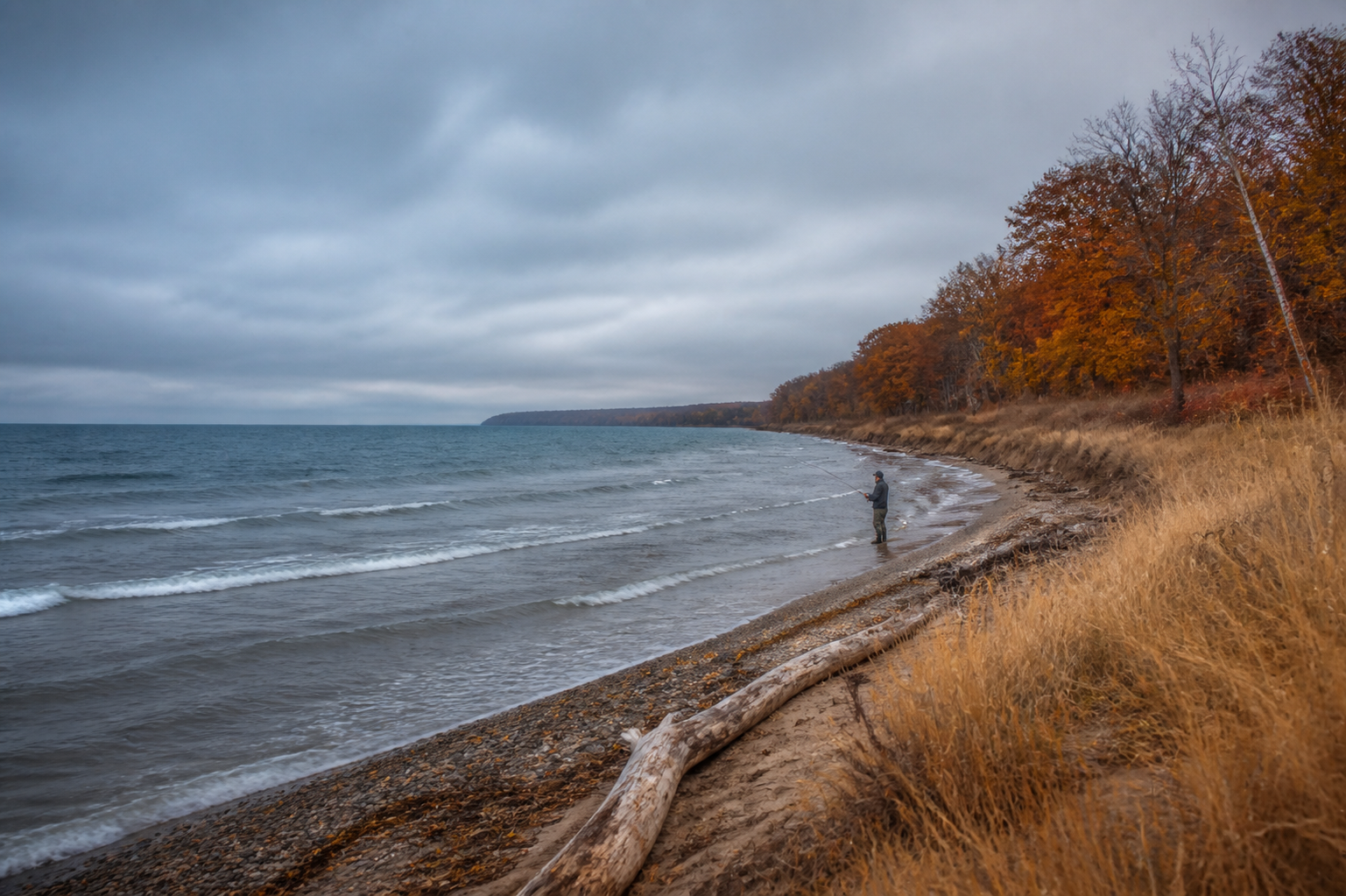
Before fishing, open the 2026 Michigan fishing regulations and any current water or access notice. The hero image above is illustrative and does not show current Great Lakes conditions.
A Michigan stocking workflow
For a specific water:
- Search the DNR database by water name or species.
- Record the date, quantity, size, and county.
- Decide whether the life stage fits the fishing opportunity you want.
- Check the current regulations and access information.
- Look for a current fishing report or water condition.
- Use the Michigan state page or near-me tool to compare nearby records.
Do not treat a larger count as a better trip. A small, accessible water with a legal shore option can be more useful than a large Great Lakes release with a different access and boat requirement.
Frequently asked questions
Where is Michigan’s fish stocking database?
Start with the Michigan DNR fish stocking page, then open the linked searchable database.
What species does Michigan stock?
Michigan DNR identifies coolwater species such as walleye, muskellunge, northern pike, and sturgeon, plus coldwater trout and salmon. The exact mix varies by water and year.
How current are Michigan stocking records?
The DNR warns that the most current information can take several weeks to appear. The USAStockedFish table in this article is a July 19 snapshot through July 9, not a real-time feed.
Does a stocked Michigan water have fish ready to catch?
Not necessarily. Read the species, quantity, size, purpose, water, regulations, and current fishing report together.